
Ram truck ownership begins with understanding your vehicle; the owner’s manual is a vital resource; It details operation, maintenance, and safety features for optimal performance.
Modern Ram trucks often include digital manuals alongside minimal printed materials, reflecting a shift towards accessible, downloadable PDF formats.
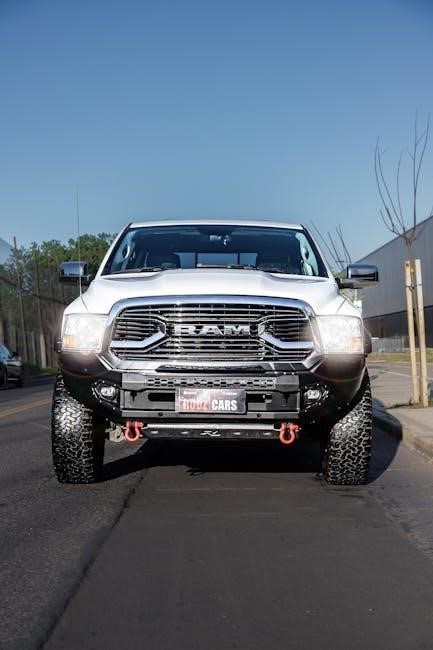
This guide provides essential information, ensuring a safe and enjoyable driving experience, covering everything from basic functions to complex technological systems.
Importance of the Owner’s Manual
Understanding your Ram truck’s capabilities and intricacies hinges on the owner’s manual. It’s not merely a collection of pages, but a comprehensive guide to safe and efficient operation. The manual details everything from routine maintenance schedules – like oil changes and tire rotations – to troubleshooting common issues, such as a dead battery or warning lights.
Ignoring the manual can lead to improper vehicle use, potentially causing damage or voiding warranty coverage. As physical copies become less common, replaced by digital formats and apps, accessibility remains key. Knowing where to find your manual, whether in a drawstring bag or online, is crucial for maximizing your Ram experience and ensuring long-term reliability.
Where to Find Your Ram Truck Owner’s Manual
Locating your Ram truck’s owner’s manual is increasingly digital, though physical copies still exist for some models. Newer trucks, like the 2023 and 2022 models, often come with a condensed printed guide and a QR code directing you to the full digital version. Many owners report receiving their manual in a drawstring bag.
The official Ram Truck website offers online access to owner’s manuals in PDF format. Alternatively, the Ram Truck customer support team can assist in locating the correct manual for your specific vehicle. As physical manuals diminish, downloadable PDFs are becoming the standard, mirroring the decline of traditional phone books.

Understanding Your Vehicle
Identifying key components and the Vehicle Identification Number (VIN) is crucial. The VIN’s location varies, but understanding your truck’s systems is paramount.
Knowing your Ram’s specific features, from engine type to towing capacity, enhances both safety and overall driving satisfaction.
Vehicle Identification Number (VIN) Location
Locating your Ram truck’s Vehicle Identification Number (VIN) is essential for various reasons, including warranty claims, vehicle history reports, and potential theft recovery. Typically, you can find the VIN in several places within the vehicle.
On the driver’s side dashboard, visible through the windshield, is a common location. It’s also often stamped on the driver’s side doorjamb, on a sticker. Furthermore, the VIN is usually present on your vehicle’s registration and insurance documents.
Checking these locations ensures you have quick access to this critical piece of information whenever needed. Knowing where to find it streamlines processes related to your truck’s maintenance and ownership.
Key Components and Systems Overview
Your Ram truck boasts a complex network of interconnected systems, each crucial for optimal performance and safety. Key components include the engine – offering various options like V6 or V8 – the transmission, and the drivetrain, potentially featuring 4×4 capability.
The electrical system powers everything from the infotainment screen to the safety features. Understanding the braking system, including ABS, and the suspension is vital. Modern Rams integrate advanced technology, like Uconnect, for seamless connectivity.
Familiarizing yourself with these core systems – detailed in your owner’s manual – empowers you to recognize potential issues and maintain your truck effectively.

Operation and Features
Ram trucks offer diverse driving modes and features, including 4×4 systems. The owner’s manual details starting, stopping, and utilizing advanced technologies for a tailored experience.
Understanding these functions maximizes your truck’s capability and ensures safe, efficient operation on and off-road.
Starting and Stopping Procedures
Proper starting and stopping procedures are crucial for your Ram truck’s longevity and your safety. The owner’s manual details the correct sequence for ignition, emphasizing the importance of a fully depressed brake pedal.
Before starting, ensure the vehicle is in Park or Neutral, and all occupants are properly secured. Familiarize yourself with the electronic key system and any associated security features.
When stopping, gently apply the brakes to ensure a smooth and controlled halt. Understand the function of the parking brake and utilize it on inclines. The manual also covers emergency stopping procedures and related safety systems.
Always consult your specific model’s manual for detailed instructions.
Driving Modes and Systems (e.g., 4×4)
Ram trucks offer diverse driving modes tailored to various conditions. The owner’s manual comprehensively explains each mode, including 4×4 engagement and disengagement procedures. Understanding these systems maximizes performance and safety.
4×4 systems vary; some are automatic, while others require manual selection. The manual details the appropriate mode for snow, mud, sand, or towing. It also clarifies limitations and potential risks associated with each setting.
Additional modes may include Eco mode for fuel efficiency or Sport mode for enhanced responsiveness. Familiarize yourself with these options to optimize your driving experience. Always refer to your manual for specific instructions.
Ram Truck Technology Features
Ram trucks boast advanced technology, detailed within the owner’s manual. This includes the Uconnect infotainment system, offering navigation, smartphone integration, and various apps. The manual guides users through setup and operation of these features.
Driver-assistance technologies, such as adaptive cruise control, lane departure warning, and blind-spot monitoring, are explained with clear instructions on functionality and limitations. Understanding these systems enhances safety and convenience.
Digital resources, like the online owner’s manual and the Ram app, provide supplementary information and troubleshooting tips. Explore these tools to fully utilize your truck’s technological capabilities.

Maintenance Schedule
Ram truck longevity relies on adhering to the maintenance schedule outlined in the owner’s manual. Regular checks of fluids, tires, and oil are crucial for performance.
Recommended Oil Change Intervals
Determining oil change intervals for your Ram truck is critical for engine health and is detailed within the owner’s manual. These intervals aren’t fixed and depend heavily on driving conditions and the oil type used – conventional, synthetic blend, or full synthetic.
Generally, older models or those under severe usage (towing, off-roading, stop-and-go traffic) require more frequent changes, potentially every 3,000-5,000 miles. Newer Ram trucks utilizing synthetic oils can often extend intervals to 7,500-10,000 miles, or even longer, as indicated by the oil life monitoring system.
Always consult your specific manual for the manufacturer’s recommendations to maintain warranty coverage and ensure optimal engine performance.
Tire Maintenance and Rotation
Proper tire maintenance, as outlined in your Ram truck’s owner’s manual, is crucial for safety, fuel efficiency, and tire longevity. Regularly check tire pressure – including the spare – using a reliable gauge, and inflate to the recommended PSI found on the doorjamb sticker, not the tire sidewall.
Tire rotation is equally important, typically every 5,000-8,000 miles, to ensure even wear. The manual will specify the recommended rotation pattern for your vehicle (e.g., front-to-back, X-pattern). Inspect tires for damage, uneven wear, and sufficient tread depth.
Ignoring these steps can lead to premature tire failure and compromised handling.
Fluid Level Checks and Top-Ups
Your Ram truck’s owner’s manual details essential fluid checks for optimal performance. Regularly inspect engine oil, coolant, brake fluid, power steering fluid, and windshield washer fluid levels. Low fluid levels can cause significant damage, so proactive monitoring is vital.
The manual specifies the correct fluid types for your vehicle; using the wrong fluid can be detrimental. Top up fluids as needed, following the recommended procedures. Pay attention to any leaks, and address them promptly.
Consistent fluid maintenance extends your truck’s lifespan and ensures reliable operation.

Troubleshooting Common Issues
The owner’s manual offers guidance for resolving typical problems, like a dead battery or warning lights. It provides basic steps before seeking professional help.
Dealing with a Dead Battery
Your Ram truck’s owner’s manual details jump-starting procedures, emphasizing safety precautions. Always wear eye protection and ensure proper cable connection sequence – positive to positive, negative to ground. Incorrect connections can damage the electrical system.
The manual will specify the correct voltage and amperage for jump-starting, crucial for preventing damage. It also outlines alternative solutions, such as using a portable jump starter. If jump-starting fails, or you’re unsure, consult a qualified technician. Ignoring warning signs or attempting unsafe procedures can lead to injury or vehicle damage. Refer to the manual for specific battery location and access instructions for your model.
Addressing Warning Lights
Your Ram truck’s owner’s manual is the primary resource for deciphering warning lights. Ignoring these signals can lead to more significant issues. The manual provides detailed explanations for each light, categorizing them by severity – critical, warning, and informational.
Critical lights demand immediate attention, potentially requiring roadside assistance. Warning lights suggest a problem needing prompt inspection. Informational lights often indicate system status. Do not attempt self-diagnosis beyond the manual’s guidance. Consult a qualified technician for complex issues. The manual also details how to reset certain lights after addressing the underlying problem.
Basic Troubleshooting for Common Problems
The Ram truck owner’s manual offers initial troubleshooting steps for frequent issues. These include jump-starting procedures, checking fluid levels, and identifying simple electrical concerns like blown fuses. It’s crucial to follow the manual’s instructions precisely to avoid further damage or personal injury.
For minor problems, the manual suggests basic checks – tire pressure, battery connections, and fluid caps. However, it emphasizes that complex repairs require professional expertise. Do not attempt repairs beyond your skill level. The manual directs owners to qualified service centers for more involved diagnostics and repairs.
Safety Features and Procedures
The Ram truck owner’s manual details critical safety systems, including airbag functionality, proper seatbelt usage, and emergency assistance features for driver and passenger protection.
Airbag System Information
Your Ram truck’s airbag system is a crucial safety component, designed to provide occupant protection during certain collisions. The owner’s manual comprehensively explains the system’s operation, including the locations of airbags – frontal, side curtain, and potentially others depending on the model year and trim level.
It’s vital to understand that airbags deploy with significant force and can cause injury if not used with a properly fastened seatbelt. The manual details precautions, such as avoiding placing objects between occupants and airbags, and the importance of maintaining a safe distance from the steering wheel.
Furthermore, the manual will outline situations where airbags may not deploy, as deployment is determined by the severity and type of impact. Always consult your specific owner’s manual for detailed information regarding your vehicle’s airbag system.
Seatbelt Usage and Maintenance
Seatbelts are the primary safety restraint system in your Ram truck, and proper usage is paramount for occupant protection during a collision. The owner’s manual emphasizes that all occupants should wear seatbelts at all times, regardless of seating position. It details correct seatbelt fitting procedures for adults and children, including guidance on using child safety seats.
Beyond usage, the manual provides essential maintenance information. Regularly inspect seatbelts for damage – fraying, tears, or malfunctions in the buckle or retractor mechanisms. Any damaged seatbelts must be replaced immediately.
Cleaning instructions are also provided, ensuring the seatbelts remain functional and effective. Always refer to your vehicle’s specific manual for detailed seatbelt information.
Emergency Assistance Features
Your Ram truck may be equipped with several emergency assistance features, detailed within the owner’s manual. These systems are designed to provide support in critical situations, enhancing safety and peace of mind. Features often include an emergency call system, automatically contacting emergency services after a significant impact.
The manual explains how to activate these systems manually, if needed, and outlines their limitations. It also details the location of the emergency assistance button and any associated subscription requirements.
Understanding these features and their operation is crucial for a swift and effective response during an emergency. Always consult your specific model’s manual for accurate details.
Towing and Payload Capacity
The Ram truck owner’s manual details crucial towing and payload information, including capacity charts and proper hitch connection procedures for safe operation.
Understanding weight limits and distribution is vital to avoid exceeding your truck’s capabilities and maintain vehicle control.
Understanding Towing Capacity Charts
Ram truck owner’s manuals contain detailed towing capacity charts, essential for safe and legal towing. These charts aren’t simple numbers; they vary based on several factors, including engine type, axle ratio, drivetrain (2WD or 4WD), and cab configuration.
The manual explains how to locate the chart specific to your truck; It emphasizes that the Gross Vehicle Weight Rating (GVWR) and Gross Combined Weight Rating (GCWR) are critical limits. Exceeding these can compromise handling, braking, and potentially damage the vehicle.
Properly interpreting the chart requires understanding terms like “trailer weight” and “tongue weight.” The manual clarifies these, ensuring owners can accurately calculate their towing capacity and avoid overloading.
Proper Hitch and Trailer Connection
Your Ram truck owner’s manual provides crucial guidance on hitch and trailer connection procedures. It stresses the importance of using a hitch receiver rated for the trailer’s weight and tongue weight. Correctly attaching the safety chains is paramount, forming an ‘X’ under the tongue to prevent trailer sway.
The manual details proper wiring harness connection for lights and brakes, ensuring visibility and control. It also explains how to verify the trailer brakes are functioning correctly before each trip.
Furthermore, it advises on inspecting all connections regularly during travel, and proper load distribution within the trailer itself for stability.
Payload Limits and Distribution
The Ram truck owner’s manual emphasizes adhering to payload limits, found on the vehicle’s door jamb sticker and within the manual itself. Exceeding these limits compromises handling, braking, and overall safety. Proper payload distribution is equally critical.
The manual advises concentrating the heaviest items directly over or slightly ahead of the rear axle to maintain stability. Avoid loading excessively at the rear, as this can reduce front-tire traction.
Understanding the Gross Vehicle Weight Rating (GVWR) and Gross Combined Weight Rating (GCWR) is vital for safe operation, as detailed within the manual’s towing section.
Warranty Information
The Ram truck owner’s manual details comprehensive warranty coverage, claim procedures, and available extended warranty options for peace of mind and vehicle protection.
Coverage specifics, durations, and exclusions are clearly outlined, ensuring owners understand their rights and responsibilities regarding repairs and maintenance.
Ram Truck Warranty Coverage Details
Ram trucks are typically covered by a 3-year/36,000-mile basic limited warranty, protecting against defects in materials and workmanship. Additionally, a 5-year/60,000-mile powertrain limited warranty safeguards the engine, transmission, and drivetrain components.
The Ram truck owner’s manual provides a detailed breakdown of what each warranty covers, including specific parts and systems. Corrosion protection is often included, with varying durations depending on the component.
It’s crucial to review the manual for exclusions, such as wear-and-tear items or damage resulting from improper maintenance. Maintaining service records is vital for successful warranty claims.
Warranty Claim Procedures
To initiate a warranty claim, first consult your Ram truck owner’s manual for specific instructions and authorized dealership locations. Contact a Ram dealership’s service department to schedule an appointment and describe the issue.
Provide the dealership with your vehicle identification number (VIN) and proof of regular maintenance. The dealership will diagnose the problem and determine if it’s covered under warranty.
Upon approval, the dealership will repair or replace the defective part. Keep all documentation, including repair orders and invoices, for your records. The manual details the claim process fully.
Extended Warranty Options
Ram offers several extended warranty plans, often referred to as Vehicle Service Contracts, providing coverage beyond the original factory warranty. These plans can cover components like the powertrain, electrical systems, and more, offering peace of mind.
Options vary in duration and deductible amounts; your Ram truck owner’s manual may list authorized providers. Dealers frequently offer extended warranties at the time of vehicle purchase.
Carefully review the terms and conditions before purchasing, understanding what is covered and excluded. Third-party providers also exist, so compare quotes and coverage details thoroughly.

Digital Resources and Support
Ram provides extensive online support, including the official website and accessible owner’s manuals. Digital resources offer convenient access to information and customer support channels.
The Ram app often contains a digital copy of the manual, mirroring the trend away from physical copies for newer models.
Contact Ram customer support directly for assistance with any questions or concerns regarding your vehicle.
Ram Truck Official Website
Ram’s official website serves as a central hub for all owner-related resources, including a dedicated section for the owner’s manual. Here, you can typically find downloadable PDF versions of your specific truck’s manual, categorized by model year and trim level.
Beyond the manual itself, the website offers access to frequently asked questions, helpful tutorials, and troubleshooting guides. It’s a valuable tool for understanding your vehicle’s features and addressing common concerns. Furthermore, the site provides information on warranty details, service scheduling, and genuine Ram parts.
Regularly checking the official Ram website ensures you have the most up-to-date information regarding your truck.
Online Owner’s Manual Access
Accessing your Ram truck’s owner’s manual online offers convenience and portability. Many owners are discovering that physical manuals are becoming less common, with manufacturers prioritizing digital distribution. The official Ram website provides a user-friendly interface for locating and downloading the correct manual for your vehicle, based on its year and model.
Alternatively, some owners report finding manuals through third-party automotive resource websites, though verifying the source’s accuracy is crucial. Online access eliminates the need to carry a bulky manual and allows for quick searches for specific information.
This digital format ensures you always have the information at your fingertips.
Ram Truck Customer Support Contact Information
For personalized assistance beyond the owner’s manual, Ram Truck offers multiple customer support channels. While the trend leans towards digital resources, direct contact remains vital for complex issues. Owners can typically find support through the official Ram Truck website, often featuring FAQs, live chat options, and a dedicated contact form.
Telephone support is also available, providing direct access to knowledgeable representatives. It’s advisable to have your Vehicle Identification Number (VIN) ready when contacting support for efficient service.
These resources ensure owners receive timely and accurate assistance.