Understanding Your Miele Oven: A Comprehensive Manual Guide
This guide provides detailed instructions for operating and maintaining your Miele oven, ensuring optimal performance and longevity. Locate your model and serial numbers for accurate support, accessing features like pyrolytic cleaning and specialized cooking modes. Understanding these details unlocks the full potential of your appliance.
Miele ovens represent a commitment to precision engineering, innovative technology, and exceptional durability in the culinary world. Renowned for their superior build quality and advanced features, Miele ovens offer a premium cooking experience designed to elevate your culinary creations. From conventional baking to sophisticated steam cooking, these appliances cater to a diverse range of cooking styles and preferences.
This manual serves as a comprehensive resource to help you understand and utilize the full capabilities of your Miele oven. Whether you are a seasoned chef or a novice cook, this guide will provide clear, concise instructions on everything from initial setup and operation to cleaning and troubleshooting. Proper understanding of your oven’s features ensures optimal performance and extends its lifespan, delivering years of reliable service. Discover the art of perfect cooking with your Miele oven!
Why Use a Miele Oven Manual?
A Miele oven manual is essential for maximizing your appliance’s potential and ensuring safe, efficient operation. While seemingly intuitive, Miele ovens boast a range of specialized features – like Moisture Plus, Perfect Bake, and pyrolytic cleaning – that require specific instructions for optimal use. Ignoring the manual can lead to suboptimal cooking results or even accidental damage.
Furthermore, the manual provides crucial information for troubleshooting common issues, deciphering error codes, and understanding warranty details. Knowing where to locate your oven’s model and serial number (often found on the inner door compartment or data plate) is vital for accessing support and replacement parts. Ultimately, this guide empowers you to confidently operate, maintain, and enjoy your Miele oven for years to come, safeguarding your investment.
Locating Essential Information
Identifying your Miele oven’s model and serial number is crucial for support, repairs, and accessing the correct manual. These numbers are typically found on the data plate.
Finding Your Miele Oven Model Number
Locating your Miele oven’s model number is the first step towards accessing specific support and documentation. For most Miele ovens, the model number is prominently displayed on the data plate. This plate is usually found inside the oven, affixed to the frame when the door is open. Specifically, check within the inner compartment, often near the bottom or side walls.
On KM 7xxx cooktop models, the model identifier appears as two groups of numbers separated by a dash in the timer display – for example, “12 34” represents model KM 1234. Remember to note this information carefully, as it’s essential when contacting Miele customer service or ordering replacement parts. Accurate identification ensures you receive the correct assistance for your appliance.
Finding Your Miele Oven Serial Number
Identifying your Miele oven’s serial number is crucial for warranty claims, service requests, and accessing appliance-specific information. Like the model number, the serial number is typically located on the data plate. For ovens, this plate is generally found inside the oven compartment when the door is opened, often alongside the model number. Check the sides or bottom of the oven’s interior.
For KM 7xxx cooktop models, the serial number is displayed in the timer display as a longer string of numbers, separated by a dash from the model identifier – for instance, “1 23 45 67 89”. Miele refrigerators have the serial number located underneath or on the side of the salad crisper or bottom drawer. Keep this number readily available for any interactions with Miele support.
Locating the Data Plate
The data plate is your primary source for both the model and serial numbers of your Miele oven. It’s a sticker or metal plate containing essential appliance information. For most Miele ovens, the data plate is strategically positioned within the oven itself. Begin your search by opening the oven door and carefully inspecting the inner compartment’s sides or bottom.
Look for a silver sticker – this is the typical format for the data plate. The plate will clearly display the model number (e.g., KM 1234) and the serial number (a longer sequence, like 1 23 45 67 89). If you have a Miele cooktop (KM 7xxx models), the numbers may appear directly in the timer display. Knowing the data plate’s location streamlines future maintenance and support requests.
Serial Number on Oven Door (Inner Compartment)
Finding the serial number on your Miele oven is often straightforward. Open the oven door and carefully examine the interior. The serial number is typically located on a silver sticker affixed to the inner compartment’s side walls or, in some cases, the bottom. This sticker also contains the crucial model number for identification purposes.
Look closely – the serial number is a longer string of digits, often presented as “1 23 45 67 89”. It’s essential to record both the model and serial numbers accurately. This information is vital when contacting Miele customer support or ordering replacement parts. Having these numbers readily available ensures a quicker and more efficient service experience, simplifying any maintenance or repair needs.
Serial Number on Cooktops (KM 7xxx Models)
For Miele cooktops, specifically the KM 7xxx series, locating the serial number differs slightly from ovens. Instead of a sticker on the appliance itself, the serial number is displayed directly on the cooktop’s timer display. Activate the timer function to reveal the numbers.
You’ll notice two groups of numbers separated by a dash – for example, “12 34”. The first group, “12”, represents the model identifier (KM 1234), while the second, “34”, is part of the complete serial number. The full serial number is a longer sequence, often appearing as “1 23 45 67 89”. Record both the model identifier and the complete serial number for accurate identification and support.
Decoding the Model and Serial Number Format
Understanding the format of your Miele oven’s model and serial number is crucial for identifying specific features and production dates. The model number typically indicates the appliance type and features, allowing for precise parts ordering and troubleshooting. Serial numbers, conversely, reveal the manufacturing date and production sequence.
While the exact format can vary, Miele serial numbers are generally lengthy, alphanumeric codes. These codes don’t follow a universally decipherable pattern publicly available, but Miele service technicians utilize them internally. Having both numbers readily available streamlines any service requests or warranty claims. Referencing these numbers ensures you receive the correct support tailored to your specific Miele oven model and its production history.

Oven Features and Controls
Explore Miele’s innovative features, including Moisture Plus, Perfect Bake, and Perfect Roast. Master the control panel, display symbols, and Dual Cooking Mode for exceptional culinary results.
Control Panel Overview
The Miele oven control panel is designed for intuitive operation, offering a seamless cooking experience. Typically, you’ll find a central dial or touchscreen for selecting functions and adjusting settings. Buttons are arranged logically, controlling temperature, cooking time, and various modes like conventional heat and fan plus;
The display provides clear feedback, showing the current temperature, remaining cooking time, and selected settings. Symbols indicate active functions, such as preheating or delayed start. Some models feature a favorites function for storing frequently used settings. Understanding the layout and functionality of the control panel is crucial for maximizing your oven’s capabilities. Refer to your specific model’s manual for a detailed diagram and explanation of each control.
Understanding the Display Symbols
Miele oven displays utilize a variety of symbols to communicate oven status and function. A flame symbol indicates active heating, while a snowflake signifies freezing or ice-making functions (on combination ovens). A clock symbol represents the timer, displaying remaining cooking time or delay start settings. Symbols for specific cooking modes, like fan plus or top/bottom heat, clearly show the selected method.
Error codes are displayed as alphanumeric combinations, signaling potential issues requiring attention – consult the troubleshooting section of your manual. A padlock symbol indicates a control lock, preventing accidental operation. Understanding these symbols allows for quick interpretation of oven status and efficient operation. Refer to your oven’s manual for a comprehensive symbol glossary and their corresponding meanings.
Moisture Plus Function
Miele’s Moisture Plus function is designed to enhance baking results, particularly for breads and pastries. This feature introduces steam into the oven cavity during the initial phase of cooking, creating an ideal environment for crust development and interior softness. The steam prevents excessive drying, resulting in a beautifully browned exterior and a moist, tender crumb.
To activate Moisture Plus, select the appropriate setting on your oven’s control panel before starting the cooking process. The oven will automatically generate steam, and the function will deactivate once the desired level of moisture is achieved. It’s important to note that this function requires a water connection or manual water filling, depending on your oven model. Experiment with Moisture Plus to elevate your baking creations!
Perfect Bake and Perfect Roast Functions
Miele’s Perfect Bake and Perfect Roast functions automate the cooking process, delivering consistently exceptional results. Perfect Bake is specifically tailored for cakes and pastries, utilizing precise temperature control and humidity regulation to ensure even rising and a golden-brown finish. Perfect Roast excels at preparing meats and poultry, employing targeted heat distribution for succulent, tender results with crispy skin.
These functions eliminate guesswork by pre-programming optimal cooking parameters based on the food type. Simply select the desired function, enter the weight of your dish, and the oven will handle the rest. The oven intelligently adjusts temperature and cooking time, guaranteeing professional-quality outcomes every time. Enjoy effortless cooking with Miele’s innovative technology!
Dual Cooking Mode
Miele’s Dual Cooking Mode offers unparalleled flexibility, allowing you to simultaneously cook two different dishes at varying temperatures and cooking methods. This innovative feature is ideal for multi-course meals or when preparing dishes with differing requirements. Imagine roasting a chicken at 350°F while baking a delicate soufflé at 300°F – all within the same oven, at the same time!
The oven intelligently manages the heat distribution, preventing flavor transfer between dishes. You can independently control the temperature, cooking mode, and cooking time for each zone; This saves valuable time and energy, streamlining your cooking process. Dual Cooking Mode truly elevates your culinary experience, making meal preparation more efficient and enjoyable.

Using Your Miele Oven
Proper operation begins with initial setup, preheating, and precise temperature/time settings. Explore diverse cooking modes – conventional, fan plus, and top/bottom heat – for optimal results.
Initial Setup and First Use
Before your first culinary adventure with your Miele oven, several crucial steps ensure optimal performance and longevity. Begin by removing all packaging materials, both inside and outside the oven cavity. Thoroughly clean the interior with a damp cloth and mild detergent to eliminate any residual dust or manufacturing residue.
Next, connect the oven to a properly grounded electrical outlet, verifying the voltage matches the appliance’s specifications. Familiarize yourself with the control panel and its various functions. It’s recommended to perform a short test run by setting the oven to a low temperature (around 200°F or 90°C) for approximately 30 minutes. This initial burn-off helps eliminate any lingering odors from the manufacturing process. Be aware that a slight smell during this first use is normal and will dissipate quickly. Finally, consult your Miele oven manual for specific instructions tailored to your model.
Preheating the Oven
Achieving accurate cooking temperatures begins with proper preheating. Your Miele oven offers several preheating options, selectable via the control panel. For most recipes, selecting a specific cooking mode (like Conventional Heat or Fan Plus) and setting the desired temperature will automatically initiate preheating. The oven will display a visual indicator, often a pulsing or changing symbol, signifying the preheating process.
Miele ovens are known for their rapid preheating capabilities, significantly reducing cooking time. Avoid opening the oven door during preheating, as this releases heat and prolongs the process. Once the oven reaches the set temperature, it will typically emit an audible signal. However, some models may simply stop the preheating indicator. Always ensure the oven is fully preheated before placing food inside for consistent and reliable results. Refer to your manual for model-specific preheating details.
Setting the Temperature and Cooking Time
Miele ovens feature intuitive controls for precise temperature and time adjustments. Use the control panel’s rotary dial or touch screen to select your desired cooking temperature, typically displayed in degrees Fahrenheit or Celsius. Similarly, adjust the cooking time using the corresponding controls. Many models allow for delayed start functionality, enabling you to program the oven to begin cooking at a later time.
The display will clearly show both the set temperature and remaining cooking time. During operation, you can modify these settings as needed. Miele’s advanced sensors maintain consistent temperatures, ensuring even cooking. Remember to consult your recipe for recommended temperature and time guidelines. For optimal results, avoid frequently opening the oven door, as this can disrupt the cooking process and affect the final outcome.
Using Different Cooking Modes
Miele ovens offer a variety of cooking modes tailored to different dishes. Conventional Heat utilizes top and bottom heating elements, ideal for traditional baking. Fan Plus combines conventional heat with a fan for faster, more even cooking – perfect for larger meals. Top/Bottom Heat provides gentle, consistent heat, suitable for delicate pastries and cakes.
Explore modes like Perfect Bake and Perfect Roast for automated precision. Dual Cooking allows combining different modes for complex recipes. Moisture Plus adds steam during cooking, keeping food moist and flavorful. Experiment with these settings to discover the best results for your favorite recipes. Refer to your oven’s manual for detailed explanations of each mode and recommended applications.
Conventional Heat
Conventional Heat, a traditional cooking method, utilizes heating elements located at the top and bottom of the oven cavity. This mode is ideal for baking cakes, breads, and pastries where even, gentle heat distribution is crucial for optimal rising and browning. It’s also well-suited for roasting meats, though cooking times may be slightly longer compared to fan-assisted modes.
For best results, position your dishes in the center of the oven. Avoid overcrowding, as this can hinder heat circulation. Preheating is recommended for consistent cooking temperatures. Consider using darker baking sheets for enhanced browning. Refer to your recipe for specific temperature and time recommendations when using Conventional Heat in your Miele oven.
Fan Plus
Fan Plus is a versatile cooking mode that combines the benefits of conventional heat with the efficiency of a fan. The fan circulates hot air throughout the oven cavity, resulting in faster preheating times and more even cooking temperatures. This mode is particularly effective for cooking multiple dishes simultaneously on different racks, as it minimizes flavor transfer.
Fan Plus is excellent for roasting meats and vegetables, achieving crispy exteriors and tender interiors. It’s also suitable for baking cookies, biscuits, and other items that require consistent heat. Lower temperatures can often be used with Fan Plus compared to conventional heat, potentially saving energy. Always check your recipe for specific guidance, and adjust cooking times accordingly.
Top/Bottom Heat
Top/Bottom Heat, also known as conventional heat, utilizes heating elements located at the top and bottom of the oven cavity. This mode is ideal for traditional baking and roasting where gentle, even heat distribution is desired. It’s particularly well-suited for cakes, soufflés, and bread, allowing for a gradual rise and consistent texture.
When using Top/Bottom Heat, preheating is crucial for optimal results. Positioning food in the center of the oven ensures even cooking. For larger dishes or multiple items, staggering the racks can help maintain consistent temperatures. This method generally requires longer cooking times compared to fan-assisted modes, but delivers classic baking results. Remember to monitor your food closely to prevent over-browning.
Cleaning and Maintenance
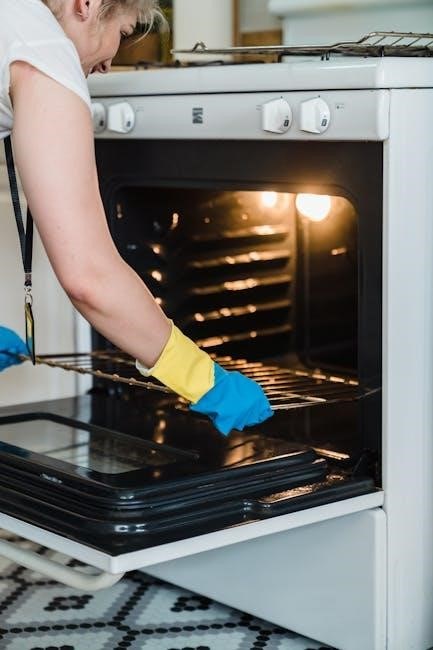
Regular cleaning preserves your Miele oven’s performance and lifespan. Utilize self-cleaning programs or manual methods, paying attention to the door and steam system for optimal results.
Self-Cleaning Programs (Pyrolytic Cleaning)
Miele ovens feature a pyrolytic self-cleaning program, a high-temperature process that reduces oven soiling to ash. Before initiating, remove all accessories like baking sheets and racks. Ensure good ventilation, as the process generates odors. Select the appropriate cleaning level based on the degree of soiling – options range from light cleaning to intensive cleaning.
The oven door automatically locks during the cycle for safety. Once completed, allow the oven to cool completely before wiping away the remaining ash with a damp cloth. Pyrolytic cleaning is an efficient way to maintain a pristine oven interior, minimizing manual effort. Refer to your specific model’s manual for detailed instructions and safety precautions regarding this powerful cleaning feature.
Manual Oven Cleaning
For lighter cleaning or as a supplement to pyrolytic cleaning, manual oven cleaning is effective. Begin by removing all racks and accessories. Prepare a solution of warm water and a mild dish soap, or utilize a commercially available oven cleaner – always following the manufacturer’s safety guidelines. Apply the solution to the oven interior, avoiding heating elements and ventilation openings.
Allow the cleaner to sit for the recommended time, then scrub gently with a non-abrasive sponge or cloth. Rinse thoroughly with clean water, ensuring all traces of cleaner are removed. For stubborn stains, a paste of baking soda and water can be applied and left overnight before scrubbing. Regular manual cleaning prevents buildup and maintains optimal oven performance.
Cleaning the Oven Door
Maintaining a clean oven door is crucial for both aesthetics and functionality. For regular cleaning, wipe down the glass surface with a damp cloth and mild dish soap. Avoid abrasive cleaners, as they can scratch the glass. For tougher grease or splatters, a specialized glass cleaner designed for ovens is recommended. Apply the cleaner and wipe with a microfiber cloth for a streak-free finish.
Miele oven doors often feature removable glass panels for thorough cleaning. Consult your oven’s manual for specific instructions on removing and reinstalling the glass. Ensure the oven is cool before attempting to disassemble the door. Regular cleaning prevents buildup and ensures clear visibility of the oven interior during cooking.
Descaling the Steam System
Miele ovens with steam functionality require periodic descaling to maintain optimal performance and prevent mineral buildup. The frequency of descaling depends on water hardness in your area; more frequent descaling is needed with harder water. Miele offers dedicated descaling agents specifically formulated for their steam ovens. Follow the instructions in your oven’s manual carefully when using a descaling product.
The descaling process typically involves adding the descaling solution to the water tank and running a dedicated descaling program. This program circulates the solution through the steam system, dissolving mineral deposits. After the program, rinse the system thoroughly with clean water to remove any remaining descaling agent. Regular descaling ensures consistent steam generation and prolongs the life of your oven.

Troubleshooting Common Issues
Addressing oven problems promptly ensures safety and performance. Check for heating issues, error codes, door alignment, and fan operation. Consult the manual for specific solutions.
Oven Not Heating
If your Miele oven isn’t heating, several factors could be at play. First, verify the power supply – ensure the oven is properly plugged in and the circuit breaker hasn’t tripped. Double-check the control panel settings; a delayed start or incorrect cooking mode might be the culprit.
Next, examine the heating elements. Visually inspect them for any breaks or damage. If they appear intact, test them with a multimeter (if you’re comfortable doing so – otherwise, call a qualified technician). Error codes displayed on the oven’s screen can provide valuable clues; consult the manual’s error code section for specific diagnoses.
A faulty temperature sensor can also prevent heating. If none of these steps resolve the issue, it’s best to contact Miele’s customer support or a certified appliance repair professional for assistance. Attempting complex repairs yourself could void your warranty or create a safety hazard.
Error Codes and Their Meanings
Miele ovens utilize error codes to communicate specific issues, aiding in troubleshooting. These codes appear on the oven’s display and are referenced in your oven’s manual. For example, a code indicating a sensor malfunction requires professional attention. Other codes might signal issues with the heating elements, fan motor, or control board.
Consult your manual’s dedicated error code section for a comprehensive list and detailed explanations. Do not attempt to repair the oven based solely on the error code; accurate diagnosis is crucial. Some errors can be resolved with simple resets (turning the oven off and on), while others necessitate a service call.
Miele’s website also provides a searchable database of error codes and their corresponding solutions. Always prioritize safety and contact a qualified technician if you’re unsure about interpreting or addressing an error code.
Door Not Closing Properly
A Miele oven door that won’t close fully can compromise cooking performance and safety. First, ensure no obstructions – cookware, baking sheets, or debris – are preventing closure. Check the door hinges for damage or misalignment; these may require adjustment or replacement by a technician. Inspect the door gasket (seal) for tears or deterioration, as a faulty gasket reduces heat retention.
If the door feels stiff, avoid forcing it; this could cause further damage. Miele ovens feature a soft-close mechanism; ensure it isn’t obstructed. A partially closed door can trigger error codes. Consult your manual for specific troubleshooting steps related to door operation.
For persistent issues, contact Miele’s customer support or a qualified appliance repair professional. Do not attempt complex repairs yourself.
Fan Not Working
If your Miele oven’s fan isn’t operating, it can significantly impact cooking results, particularly with fan-assisted modes. Initially, verify the oven is set to a cooking mode that activates the fan – such as Fan Plus or Convection Bake. Check for error codes displayed on the oven’s control panel, as these provide specific diagnostic information.
A non-functioning fan may indicate a motor failure or obstruction. Do not attempt to disassemble the fan assembly yourself. Ensure the fan blades are free from any debris or buildup. If the issue persists, it’s likely a component failure requiring professional attention.
Contact Miele’s customer support or a certified technician for repair. Operating the oven with a faulty fan can lead to uneven cooking and potential damage.